Thursday, 21 June 2012

Gove And Mullen

Politicians in the UK (and perhaps elsewhere in the world) have an annoying habit of pretending to leak stories to the press, when in actual fact it has been carefully planned and directed to certain media outlets. Late last night the Daily Fail (please don't feel obliged to click on the link - it will only give them advertising revenue) "broke" the exclusive that our favourite Pob look-a-like, Michael Gove, plans to scrap GCSEs by 2016 and replace them with a two-tier system of O-levels and CSEs, like we had before 1988.

I think this is a monumentally bad idea. He is simply pandering to an elitist bunch of old farts who look back on the 1950s and 1960s as a Golden Age of Education. The GCSE system is not perfect by any means - we could always stand to improve on it, and given proper consultation I would be in favour of this move, but going back to a set of qualifications that were deemed unfit for purpose in the 1980s seems a little antediluvian, to say the least. He's also planning to get rid of the National Curriculum (opening the door for all sorts of pseudoscience and creationist bollocks to be taught in the name of science), and to replace the three big exam boards in England with a single one (the least bad idea of the lot, but Gove will not find it easy to destroy three big companies like Edexcel, AQA and OCR).


How many teachers are feeling today...

There have been some quite excellent posts expressing the overwhelming teacher opinion on this all, including the Grauniad, and the FT. The latter has the advantage of data, showing clearly who the most adversely affected will be.

And then there's this article from the Torygraph. According to Peter Mullen (do check out his Wikipedia page - he's one of the worst ambassadors for Christianity I can think of), we are useless, illiterate, ignorant, airport novel-reading, rock gig-attending, anti-elitist, "overpaid, unionised thugs".

How demotivating. For me and for my students. The students are in the middle of exams at the moment - many in the College are part-way through their GCSEs. They've just been told that their exams are meaningless. Paul and I saw a number of tweets this morning from students wondering if they should even bother to go in and sit the rest of their GCSEs. It was very sad to see.

I also saw tweets from other teachers, saying this had reinforced their decisions to leave teaching, or was likely to result in them leaving in the next few years. It will probably reduce the number of people applying to become teachers. Why would they, when a distinctly un-Christian priest who can't keep from breaking the odd Commandment is telling them they're shit?

I am not a shit, useless teacher (though on bad days full of BTEC I sometimes feel that way). I look after my kids, even the kids who are older than me. I teach them to be enthusiastic about biology, to develop their inquisitive skills, to be able to apply their deep subject knowledge to new and interesting situations. I give them a well-tuned bullshit detector and the ability to do Harvard referencing in their sleep. I cuss, I speak sarcastically, I tell dirty jokes. Hell, I've baked them all flapjacks for every single A-level exam, because I know that for some of them it's the only meal they're going to get all day.


Flapjacks, cooked to the recipe I posted yesterday.

So, as pissed off as I am, and as hurt by the words, I know that I, and the vast majority of teachers, do not fit in with Mullen's attack. I do not recognise the people he is criticising. I just wish that this sort of attack didn't demotivate and sadden.

But if Mullen wants to put his money where his mouth is, I'd be more than happy to go head-to-head with him sitting a load of GCSE exams. I'll take on Gove too. I'd like to see these arseholes demonstrate their supposed superiority. And if they decline, well, fuck them.

Wednesday, 20 June 2012

Flapjacks

I don't think I've ever done a recipe on here, but my students have asked for my flapjack recipe after I inflicted some on them before each A-level exam, so I may as well share the love. This is a mutated form of a recipe I think my mum got from Mrs Beeton's book - I've adapted it for my own needs, and I think it's clear that I'm a biologist rather than a chemist or physicist...

Materials
200g butter/butter spread
200g demerara sugar
500g porridge oats
2 massive tablespoons of golden syrup

Method
  1. If you remember, shove the oven on to about 180°C.
  2. Melt the butter or spread in a saucepan on a hob.
  3. When liquid, add the sugar and stir until it's all mixed in.
  4. Add the oats and stir well.
  5. Add the golden syrup and find someone with half-decent upper body strength to stir it a bit better.
  6. Grease a baking tray. Actually, sod that, just line it with kitchen foil, because otherwise you'll be chiselling flapjack off the tray.
  7. Pour the mixture into the tray and spread out with a wooden spoon until it's evenly distributed.
  8. Put in the oven and watch it intently until the edges look as though they might start to burn in the next minute or so.
  9. Remove from the oven and cut into pieces before allowing it to cool.
Once you have this basic recipe working, you can experiment. For instance, I did plain flapjacks for the Unit 1 exam, but then put a layer of milk chocolate cake covering over the top of cooled flapjacks for Unit 2. For Unit 4 the request came in for white chocolate and strawberry flapjacks, so I added two packets of dried strawberries to the flapjack mix, then poured white chocolate cake covering over the cooled flapjacks.

I have no idea what to bake for Unit 5.

Monday, 18 June 2012

Gifts

After several years of teaching a class of students, I feel compelled to give them something to remember me by; something they can take with them on their next step. Last year I had a really small A2 class, so I bought them all a copy of Do We Need Pandas?. This year's cohort is nearly twice the size, and it was clear I couldn't stretch to buying books for everyone.

So I've gone with something much more personal, but significantly cheaper. Still, it is most definitely the thought that counts in this case (I nearly made the Chemistry lab technician cry when she saw what I was doing). I've found quotes for each of my students, printed them and framed them:


This is what I've found for each of them.

The student whose devotion to their daughter has been a delight to watch:
If a child is to keep alive his inborn sense of wonder, he needs the companionship of at least one adult who can share it, rediscovering with him the joy, excitement and mystery of the world we live in. (Rachel Carson)
The student whose study strategy has been a rather scattergun approach:
In all science, error precedes the truth, and it is better it should go first than last. (Hugh Walpole)
The student who has suffered through my teaching for two years with barely concealed despair:
No man who worships education has got the best out of education.... Without a gentle contempt for education no man's education is complete. (G.K. Chesterton)
The student who just never stops to sniff the roses:
I urge you to please notice when you are happy, and exclaim or murmur or think at some point, 'If this isn't nice, I don't know what is.' (Kurt Vonnegut)
The student who was notably excited upon learning that research was something scientists could do as a career:
An experiment is a question which science poses to Nature, and a measurement is the recording of Nature's answer. (Max Planck)
The student who has dealt with major issues and come out the other side relatively unscathed:
A woman is like a tea bag. You never know how strong she is until she gets in hot water. (Eleanor Roosevelt)
The student who nearly left it too late to ask for help:
No man is an island, entire of itself. Each is a piece of the continent, a part of the main. (John Donne)
The student who is going to train as a midwife:
You cannot help but learn more as you take the world into your hands. Take it up reverently, for it is an old piece of clay, with millions of thumbprints on it. (John Updike)
The student who does not, and will not conform to expectations:
To be nobody but yourself in a world which is doing its best, night and day, to make you everybody else means to fight the hardest battle which any human being can fight; and never stop fighting. (e.e. cummings)
The student who desperately wants to change the world:
We must not, in trying to think about how we can make a big difference, ignore the small daily differences we can make which, over time, add up to big differences that we often cannot foresee. (Marian Wright Edelman)
The student who perseveres and claws back success from the jaws of defeat:
Ever tried. Ever failed. No matter. Try Again. Fail again. Fail better. (Samuel Beckett)
The student who never quite lets on how brilliant they are until the last moment:
Don't live down to expectations. Go out there and do something remarkable. (Wendy Wasserstein)
The student who needs to know things get better:
Bad times have a scientific value. These are occasions a good learner would not miss. (Ralph Waldo Emerson)
The student who is a hopeless romantic:
The best scientist is open to experience and begins with romance – the idea that anything is possible. (Ray Bradbury)
The student who has changed paths:
Two roads diverged in a wood, and I – I took the one less traveled by, and that has made all the difference. (Robert Frost)
Each framed quote has been wrapped, and accompanied by a little card bearing the words Myosotis arvensis. Some of these students have been mine since GCSE, and it's a wrench to see them go. That said, if they cock up their exams I'll probably see them next year as they get a place on our HND through Clearing...!

Sunday, 10 June 2012

Things I Learned From My Students #11: Procrastination

What better time for a blog post than when I should be writing a statement of application for an internal vacancy? My A2 students have their Unit 4 exam this coming Friday, so I should think there are 15 alpabetised sock drawers in west London, as an indicator of the amount of procrastination taking place. Anyway, here are some pearls of wisdom to pass on to you.
  1. Apparently it's entirely normal to e-mail your biology lecturer Led Zeppelin lyrics at 3am on a Saturday morning.
  2. Yet apparently it's not an achievable task to e-mail your biology lecturer the outstanding coursework at 3am on a Saturday morning.
  3. There's no point committing a long name like Cedrus libani to memory when you can just call it Big Crazy Tree Mudafuuuu.
  4. It's impossible to memorise three Latin names for plants, but perfectly reasonable to memorise the first and last names of the entire Polish football team.
  5. No matter how awful a student's home life is, they are always thankful that their name is not Melvin Calvin.
  6. Barnacles deserve maximum respect.
  7. Hangovers really aren't conducive to starting the first part of the A2 biology syllabus, and may result in the bunking off of the afternoon's physics lesson.
  8. If you're a teenage boy, every round object resembles breasts, and every long object resembles a penis.
  9. When doing an experiment to measure the volume (and therefore density) of an irregular object, some joker always asks if they can measure the volume of their penis.
  10. These jokers don't like it if you hand them a 10ml measuring cylinder.
  11. There is no such thing as bad weather; only inappropriate clothing. And boy, is there inappropriate clothing for fieldwork...
  12. Kitten heels are not great footwear for a trip round a plant nursery.
  13. Until such time as I can train my lab pelargoniums to do a dance routine to "Somebody That I Used To Know", my students will never be truly interested in plants.
  14. The level of disgust expressed at being defaecated on by a giant millipede should never be underestimated.
  15. Millipedes have "too many legs".
  16. The word "bodman" apparently means "condom".
  17. It's perfectly acceptable to refer to your female teacher as "Bro" or "Bruv".
  18. I may need to wear lower-cut tops if my students are confused about my gender.
  19. Flapjacks really are very well received pre-exam sustenance.
  20. The Marmoset Song exists. Thank you. I mean it. Really.

Monday, 4 June 2012

Setting Summer Homework

I have the onerous task of setting summer work for my AS students, who return to College for two weeks of A2 study on Wednesday. As we have literally no money, the possibility of taking them on fieldwork has been ruled out. So they can't get their coursework written over the summer. Arsebiscuits. So I've been trying to think of something productive that they could do, that would be helpful to them for their A2 studies. I've copied my proposed handout, and would be grateful for feedback. Some of you who are alumni of the Cambridge Earth Sciences Department will recognise the final question as one of Simon Conway Morris' favourites for the Part II essay question. If any of you have some suggested amendments or replacements, please let me know.

This is your summer homework. It is non-negotiable. If you wish to do A2 Biology in September then you must complete the assignment. You are going to set up and maintain a blog over the summer. You will be expected to keep this blog going throughout your A2 year, using it for short assignments, revision notes and requests for help.

Over the next two months, you will choose at least four of the six topics listed, and write a blog post on each. You should be able to write 400-600 words for each topic. Some of these topics you will think are pointless and dull, but several specification points on Topic 5 examine the role of scientists in the communication of science, how scientists arrive at consensus, what consensus means in the context of science, and the nature of science itself. At A2 you are also expected to understand the criteria listed in the How Science Works document. You should be reading scientific articles more frequently, reflecting on your own learning, consolidating your thoughts and getting ideas from your peers. Contrary to this being a pointless exercise, this could be the most important thing you have ever done in science.

Topics
  1. Introduce yourself (to the extent that you are willing to be identified). Write about your earliest memories of science. How have these influenced you to study the sciences? Do you wish to continue to study sciences at university? If so, what made you choose this subject? If not, what has captured your mind more than science?
  2. Research the ways in which scientists can communicate with other scientists and with the general public. What are the advantages and disadvantages of each method? What are the benefits and drawbacks of the existing peer-review method for academic publications? How do you feel peer-review could be improved?
  3. Summarise the ecological practical work you carried out on campus. Describe the factors affecting the distribution of the organism studied. Apply what you have learned about competition, niches and abiotic factors to this distribution.
  4. Is there any point trying to save the Earth? Describe arguments for and against environmentalism, and offer your conclusions on the fate of the human race.
  5. What, for you, has been the most exciting scientific discovery of the past decade? How has it influenced your life or your studies? Why do you consider it to be so exciting?
  6. Imagine you could ask Slartibartfast (look him up!) any question about the Earth. What would you ask him, and why?
You should set up your blog in the final lesson of the Introduction to A2 course, and submit the URL to me. Ensure that there is an RSS feed available for the blog. I will collate all the blogs and put a group feed up on Moodle, so all blogs can be subscribed to at once.

You should write four blog posts at least, between now and 16th August. Since all work can be checked throughout the holiday, it will not be necessary to submit any written work in August. A checklist will be provided at Enrolment listing those who have successfully completed the work.

I will comment on each blog post to give you feedback, and I will encourage other teachers and scientists I know to do the same. I highly advise you to comment on a few blog posts too, to give your own feedback to your classmates.

Saturday, 2 June 2012

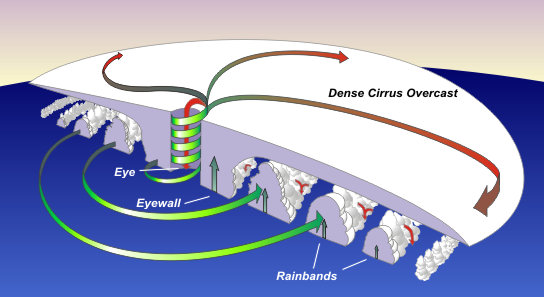
Microteaches #8: Eye Of The Hurricane

This coming week is, for schools, half-term. For those of us brave souls who have decided to work in FE, there is no half-term, only a weird week of no exams, between the AS and A2 period. I've just caught my breath from the AS exams, only to go full-pelt into A2 in just over a week's time. And then it's all over for another year.


Like the eye of the hurricane, this is the oddly calm area sandwiched between two violent storms. So while I can, here are some links and thoughts.

Science

The video "The story of a single heartbeat", available from Understanding Life, should be required viewing for all A-level students looking at the heart.

If that's not enough, then just when they thought they were beginning to understand genetics, they should read this press release on gene modifications. And on the subject of genetics, they should look at Alby's post on Consanguinuity and the coefficient of relationship, which has relevance to much of Edexcel's Unit 2.

There was excitement in the entomology world a few months ago, when giant stick insects, thought to be extinct, were rediscovered on an isolated island. Students of mine who can't cope with the millipedes in the lab may not wish to look at the photos in this link. This is a great example of the role of zoos in captive breeding and reintroduction programmes.

Any students (or teachers for that matter) looking for cell biology images, would be advised to check out The Cell: An Image Library. That said, much of what I teach them at A-level and BTEC is a massive simplification, or a model, of what is actually happening in the cell. For example, mitosis is way more complicated than my A-level students think. And I genuinely had no idea that cells shut down during cell division.

There's a sweet illustrated guide to the evolution of different skin colours, which is a little simplified for A-level, but a nice introduction nevertheless. On our evolution, there's another hypothesis on why we walk upright.

Teaching

It's one of the most stressful times of the year for teachers, and certainly for their students, so it is good to be reminded of the physiology and treatment of stress, by Informed Education.

Putting into perspective my own success and progression rates, it is a timely reminder that, according to this DfE report on progression, in FE colleges, only 55% of AS biology students progress to A2.

For my students who are feeling demotivated, and worried that they are going to be outperformed by independent school students, there is research indicating that state school students actually do better in their university exams. Your time will come, my darlings.

I'll be trying to shake off the image of Cambridge as a toff's playground when I take four of my finest to the Cambridge open day in July. Nothing will make me prouder than being able to show off my students at my alma mater. I've even found my CAM Card...

Finally, I'm reassured by this post on being the "right kind of science role model" by Marie-Claire Shanahan. As a teacher I have a worrying amount of influence on my students. None of them want to be FE biology lecturers any time soon, but occasionally I get a breakthrough. It is a comfort that I am helping by engaging with them, discussing careers and being open about gender differences in the sciences. I'm probably helping more than my (male) physics lecturer colleague who declares that "biology is for women".

Tuesday, 29 May 2012

To My Husband, On The Morning Of His Students' Exam

Dear Paul,

I've just said goodbye to you at reception. As I walked through the common room the music playing over the loudspeakers was Johnny Cash's version of "Personal Jesus". An interesting choice for this morning!

I know you are racked with nerves over the exam. This has been your first year teaching - ever - and to go straight in with an exam class, unaided, has been a baptism of fire. You are scared that you haven't prepared the students well enough, that they will not achieve what they are capable of, or that they will freak out in the exam hall.

You have done all that you can to help them prepare for this exam.

So what can you do for them now? Pretend that you aren't as nervous as they are. Smile when you see them, look relaxed, even if your stomach is in knots. Students react to their teachers' moods more than we sometimes realise.

It's never going to get better. You will never have an exam where you don't feel like this. You will always feel protective of your students, and responsible for their welfare and achievement, even if you cannot influence either entirely.

It will become easier to fake confidence with them. You will find smiling, telling them not to panic, giving them reassurance, comes more naturally over time. After a while, they won't even twig that you're nervous too.

But the nerves will never leave you. And you wouldn't want them to.

All my love,
Julia xxxxx

Sunday, 27 May 2012

Pseudoscience And The Natural History Museum

I've blogged before about eyebrow-raising items on sale in the NHM shop. I know and appreciate that the retail department is entirely separate from the science departments. However, this is no excuse for what I saw on sale on Friday night:


There, in between decent scientific guides to gemstones, minerals and fossils (note the British Mesozoic Fossils and British Cenozoic Fossils books on the right hand side), is The Crystal Bible. Now, it could just be a term to indicate that it is a detailed reference guide, right?


Wrong. "500 crystals to heal your body, mind and spirit."


Among the amazing things this book claims is that crystals will help "find love" and "reduce workplace bullying". The author also claims to be a "psychic researcher" and "paranormal expert".

To add insult to injury, the book isn't just tucked away in a dark area of the museum shop - it's also displayed prominently on the counter next to the minerals:


By offering this book for sale, particularly alongside genuine science books, the Museum is giving credence to this pseudoscientific bullshit. The public trust the NHM to give them accurate, interesting scientific information, and I don't believe this should stop the moment we enter the bright lights of the retail environment.

Retail and science may not mix at the NHM, but they bloody well ought to, for this very reason. Museums join teachers in having a duty to educate and inform. Crystal "healing" suggests that silicates can cure physical illnesses through some supposed mystical energy. This isn't just harmless rubbish - where pseudoscience claims to cure disease (apparently it will "help to relieve a headache"), there is a real risk that people will use these bogus therapies over genuine medical attention. While in mild cases this may simply be a case of a tax on human stupidity, the potential for harm is evident.

The stocking of this book in the shop of the most prominent museum in the country is up there with my biology lecturer colleagues who think evolution is fictional, the head of physics who says the Earth is only 6,000 years old, and the chemistry lecturer who follows homeopathy. It is incongruous, an abuse of trust, and just a whole big barrel full of wrong.
Related Posts Plugin for WordPress, Blogger...