Saturday, 2 June 2012

Microteaches #8: Eye Of The Hurricane

This coming week is, for schools, half-term. For those of us brave souls who have decided to work in FE, there is no half-term, only a weird week of no exams, between the AS and A2 period. I've just caught my breath from the AS exams, only to go full-pelt into A2 in just over a week's time. And then it's all over for another year.
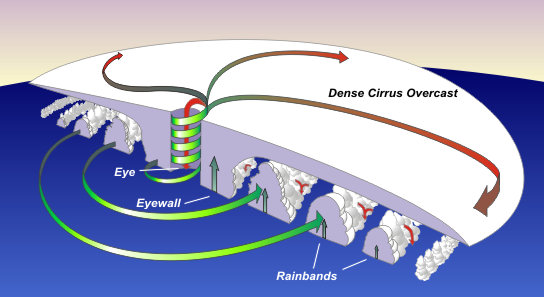

Like the eye of the hurricane, this is the oddly calm area sandwiched between two violent storms. So while I can, here are some links and thoughts.

Science

The video "The story of a single heartbeat", available from Understanding Life, should be required viewing for all A-level students looking at the heart.

If that's not enough, then just when they thought they were beginning to understand genetics, they should read this press release on gene modifications. And on the subject of genetics, they should look at Alby's post on Consanguinuity and the coefficient of relationship, which has relevance to much of Edexcel's Unit 2.

There was excitement in the entomology world a few months ago, when giant stick insects, thought to be extinct, were rediscovered on an isolated island. Students of mine who can't cope with the millipedes in the lab may not wish to look at the photos in this link. This is a great example of the role of zoos in captive breeding and reintroduction programmes.

Any students (or teachers for that matter) looking for cell biology images, would be advised to check out The Cell: An Image Library. That said, much of what I teach them at A-level and BTEC is a massive simplification, or a model, of what is actually happening in the cell. For example, mitosis is way more complicated than my A-level students think. And I genuinely had no idea that cells shut down during cell division.

There's a sweet illustrated guide to the evolution of different skin colours, which is a little simplified for A-level, but a nice introduction nevertheless. On our evolution, there's another hypothesis on why we walk upright.

Teaching

It's one of the most stressful times of the year for teachers, and certainly for their students, so it is good to be reminded of the physiology and treatment of stress, by Informed Education.

Putting into perspective my own success and progression rates, it is a timely reminder that, according to this DfE report on progression, in FE colleges, only 55% of AS biology students progress to A2.

For my students who are feeling demotivated, and worried that they are going to be outperformed by independent school students, there is research indicating that state school students actually do better in their university exams. Your time will come, my darlings.

I'll be trying to shake off the image of Cambridge as a toff's playground when I take four of my finest to the Cambridge open day in July. Nothing will make me prouder than being able to show off my students at my alma mater. I've even found my CAM Card...

Finally, I'm reassured by this post on being the "right kind of science role model" by Marie-Claire Shanahan. As a teacher I have a worrying amount of influence on my students. None of them want to be FE biology lecturers any time soon, but occasionally I get a breakthrough. It is a comfort that I am helping by engaging with them, discussing careers and being open about gender differences in the sciences. I'm probably helping more than my (male) physics lecturer colleague who declares that "biology is for women".

Tuesday, 29 May 2012

To My Husband, On The Morning Of His Students' Exam

Dear Paul,

I've just said goodbye to you at reception. As I walked through the common room the music playing over the loudspeakers was Johnny Cash's version of "Personal Jesus". An interesting choice for this morning!

I know you are racked with nerves over the exam. This has been your first year teaching - ever - and to go straight in with an exam class, unaided, has been a baptism of fire. You are scared that you haven't prepared the students well enough, that they will not achieve what they are capable of, or that they will freak out in the exam hall.

You have done all that you can to help them prepare for this exam.

So what can you do for them now? Pretend that you aren't as nervous as they are. Smile when you see them, look relaxed, even if your stomach is in knots. Students react to their teachers' moods more than we sometimes realise.

It's never going to get better. You will never have an exam where you don't feel like this. You will always feel protective of your students, and responsible for their welfare and achievement, even if you cannot influence either entirely.

It will become easier to fake confidence with them. You will find smiling, telling them not to panic, giving them reassurance, comes more naturally over time. After a while, they won't even twig that you're nervous too.

But the nerves will never leave you. And you wouldn't want them to.

All my love,
Julia xxxxx

Sunday, 27 May 2012

Pseudoscience And The Natural History Museum

I've blogged before about eyebrow-raising items on sale in the NHM shop. I know and appreciate that the retail department is entirely separate from the science departments. However, this is no excuse for what I saw on sale on Friday night:


There, in between decent scientific guides to gemstones, minerals and fossils (note the British Mesozoic Fossils and British Cenozoic Fossils books on the right hand side), is The Crystal Bible. Now, it could just be a term to indicate that it is a detailed reference guide, right?


Wrong. "500 crystals to heal your body, mind and spirit."


Among the amazing things this book claims is that crystals will help "find love" and "reduce workplace bullying". The author also claims to be a "psychic researcher" and "paranormal expert".

To add insult to injury, the book isn't just tucked away in a dark area of the museum shop - it's also displayed prominently on the counter next to the minerals:


By offering this book for sale, particularly alongside genuine science books, the Museum is giving credence to this pseudoscientific bullshit. The public trust the NHM to give them accurate, interesting scientific information, and I don't believe this should stop the moment we enter the bright lights of the retail environment.

Retail and science may not mix at the NHM, but they bloody well ought to, for this very reason. Museums join teachers in having a duty to educate and inform. Crystal "healing" suggests that silicates can cure physical illnesses through some supposed mystical energy. This isn't just harmless rubbish - where pseudoscience claims to cure disease (apparently it will "help to relieve a headache"), there is a real risk that people will use these bogus therapies over genuine medical attention. While in mild cases this may simply be a case of a tax on human stupidity, the potential for harm is evident.

The stocking of this book in the shop of the most prominent museum in the country is up there with my biology lecturer colleagues who think evolution is fictional, the head of physics who says the Earth is only 6,000 years old, and the chemistry lecturer who follows homeopathy. It is incongruous, an abuse of trust, and just a whole big barrel full of wrong.

Saturday, 19 May 2012

Lab Animals

I've had plants in my biology lab for a couple of years now - the bog-standard variegated Pelargonium, a couple of parrot plants, some cycads too fragile for my garden and a Sarracenia that uses more distilled water than all the week's practicals put together.

But it's clear that all labs need some animal life (in addition to the students), whether it's hamsters, fish or something a bit more exotic. Dave had suggested Mexican blind cave fish, which were a really interesting species. I'd been interested in cichlids, so I could point at them and shout "SYMPATRIC SPECIATION! LOOK!!!" at incredulous A2 students. But tropical fish would have been very high-maintenance - too much for a lab that would be shut down entirely for ten days at Christmas, even if I could have come in to feed and clean the fish during the holidays.

Then, one dismal Sunday afternoon a few weeks ago, I went to the Isleworth Spring Fair, to support Paul, who was working on a stall. We had a bit of a wander round on one of his breaks, and saw a tent with a bit of activity going on. As soon as I walked in I saw there were lots of animals there to be handled! I chatted to the owner of the animals - he works for the education department at the Natural History Museum normally, but evidently has a bit of a side project bringing his pets to events for people to learn about. He had a python, corn snake, milk snake, veiled chameleon, bearded dragon and loads of invertebrates.

Including a giant millipede.

Turns out these guys are really low-maintenance and fascinating creatures. It's a bit like being walked on by a toothbrush. They are herbivorous, and detritivores at that, so the freshness of the food is not really an issue. They have a commensal relationship with cleaner mites, and their anatomy is really interesting.


They arrived by courier on Wednesday evening and I brought them straight into the lab. The first one I put in the tank was absolutely enormous, bold as brass and very curious. It investigated the tank thoroughly, then positively inhaled a slice of leek. The second one was grumpy, curled itself up in a ball and sulked for hours. I'm astounded that it didn't cover me in cyanide, it was so pissed off with me. They are both pooing like it's going out of fashion too.

For reasons that will only be clear to my A2 students, the first one has been named Bodman (left in both pictures), and the second one Moisted.


Two of my students have held them so far. One of the BTEC girls asked to hold it and then got scared when its legs started to move. And I made my prospective vet student hold one and told him he'd better get used to them as he might have some as patients.

With my AS students in the middle of exams, and my A2s about to start, and my BTECs starting to wind down and finish their assignments, it's nice to have something still alive in the lab to nurture, sustain and care for. It might make the end of term seem a little less wretched than it usually does.

Thursday, 10 May 2012

Rule 34

Someone who doesn't know me might be forgiven for thinking that, as a member of the teaching profession, I am somehow morally righteous, prudish and humourless in the classroom. The rest of you will be under no such assumptions. The following video is a fairly typical exchange between students and eventually me - this week I introduced them to Rule 34.

Other than the information that this is my A2 Biology class, who were doing their final core practical ("Investigating Habituation to a Stimulus"), the students are anonymised. Members of the class who happen upon this video will instantly know who the students are, but I was sure not to film their faces, and no one refers to anyone by name, so their dignity (such as it is) is preserved. All the students in the video, whether in shot or in voice only, are over 18.

Which makes the way they are about to respond to the snail utterly hilarious.


Tomorrow I finish the A2 syllabus, and then it's past papers and practice questions until the exams begin. I really am going to miss this group - a few I have only taught for one academic year, but most of them have been my students for two years. A select handful were my first GCSE class nearly three years ago. In that regard it's the end of an era.

They have made me laugh and cry, sometimes in equal measure. They have frustrated and delighted. Their utter revulsion at the thought of doing fieldwork was one of my most challenging A2 moments, but the weeks we've spent on their coursework have been as strong a bonding experience all round as yomping around a field would have been. They have offers at a range of universities to study great things. As I do each year, I will be very tearful at the end of their Unit 5 exam, and the lab will feel a lot quieter for a while.

They are going to save the world, and it has been a privilege to teach them. Even if they are a load of big girls' blouses when it comes to poking a snail or two.

Wednesday, 25 April 2012

Cauli-Flowers

In January, I attended the ASE Annual Conference in Liverpool. Among all the many amazing demonstrations, talks, workshops and exhibits, I got chatting to some of the representatives from SAPS, who were showing off a new protocol for plant totipotency experiments.

For those readers for whom organisms have to have been dead for a few million years before they're worth studying, totipotency refers to the ability of plant cells to differentiate into any other cell in the plant. Our cells lose that ability a few days after fertilisation, but the few that remain are referred to as stem cells. So basically all plant cells are stem cells if you like.

Last year, we did the standard Edexcel protocol of decapitating mustard explants and growing them in agar. Despite relatively good hygiene, this was mostly an exercise in just how filthy my AS students were - you should have seen what grew in the agar, and none of the growing things were mustard explants. Little grey worm things, anyone?

Being not overly optimistic about this year's students' personal hygiene, I was keen to try out an alternative route, and SAPS had a good protocol. It's so elegantly simple. Plain agar is used rather than nutrient agar, and it's made up using Milton tablets. A fresh cauliflower should be used, but the tiniest bits can be used, so with the leftovers the technicians can have cauliflower cheese for their lunch.

About three weeks before the Easter holidays, my AS groups did the plant totipotency practical. Just before the Easter holiday it was clear the experiment had worked, as bits were turning photosynthetic, but we decided to keep the experiment running for as long as possible.


All this came out of a couple of tiny little florets, no more than 3-4mm wide. There are some proper leaves, up at the top of the plant. But this one was really impressive:


Can you see a purple patch over on the right hand side? That is a cauliflower flower!

I am so delighted with this practical - I think of all the AS and A2 ones I've done this year, this has been my favourite. Some students' cauliflowers did not take to differentiating - for some students there was a pretty obvious explanation (they suspended it halfway down the agar column, completely suffocating it but preserving it beautifully), but others just went a little brown and sat there. I had about a dozen vials across both groups, and four of them worked superbly, which is a better success rate than the old root tip squash (another old faithful A-level practical).

I'm very grateful to SAPS for their advice - they were really helpful when we were having difficulties tracking down plain agar, and they even e-mailed me when they saw me chatting on Twitter to another teacher about the protocol.

Now I'm just going to see how long we can keep these little baby cauliflowers growing...

Monday, 23 April 2012

Ave Praeceptor! Morituri Te Salutant

In just under three weeks' time I shall be sending my little AS Biology lambs off to the slaughter. Or the Unit 1 exam, as I think they prefer to call it. I haven't taught them everything I know, because then they'd have total recall of the Eagles' back catalogue and they'd never drink Southern Comfort. But I've taught them a massive amount. And the survivors get to come back and do another year of it before starting university.

My father continues to be impressed that I've got as far as finishing the syllabus (apparently this was something of an aspirational target rather than something expected of teachers when he was in the business). That said, I haven't told him that I'm frankly shitting myself over whether I'll finish the A2 syllabus in time to give those poor buggers sufficient time to revise.


I'm feeding my AS and A2 students bits of exam technique as I go along. Last week I gave one of the classes the news article claiming that "Drinking water improves exam grades", and they examined the claims before reaching their own conclusions on the quality of the study and how they would eliminate some of the rather obvious flaws (e.g. whether bringing a water bottle and drinking from it was a proxy for overall preparedness).

Of course, then I had to tell them that Omega-3 and Brain Gym are a load of old codswallop, and that it really was a little too late to be looking for short-cut ways to improve "brain power". But then again, no one ever got a marketing deal out of "Eat a healthy balanced diet, do a bit of exercise and work your bloody socks off". I ate marmite on wholemeal toast for breakfast for a month before my finals at Cambridge, and I don't imagine it did me any more good than if I'd had a bacon sandwich from Nadia's Patisserie.

Any useful tips I can pass on to my students other than RTFQ and ATFQ?

Friday, 30 March 2012

Hexagonal Learning

The spring term ended today, and unlike the end of the autumn term, where I may have slightly gone down the pub a bit, I came straight home to unwind. And yet, here I am, blogging about an awesome teaching moment today.

For a while I've been playing around with SOLO Taxonomy as an aid to learning. I'm trying it out with my AS Biology workshop, a one-hour class for extra support across both AS groups. They use sheets as devised by Tait Coles to get to grips with the hierarchy and identify targets for themselves. My main aim was to get them beyond multistructural thinking and into relational thinking.

For the final workshop of the term this morning, I decided to try the Hexagons. Some of the students were still struggling to consolidate their learning, so I asked them to pick the topic they were struggling with most. One group managed a little, and were able to put key events of mitosis into a sequence (though I may have pared down some of their text a bit):


Where it really worked, however, was with a small group of my high-fliers. They started off looking at cell membranes:


But it kept growing and growing. Periodically I came over, wrote another key term on a hexagon and threw it in to stretch them. By the end of the lesson it looked like this:


They had linked it through to protein synthesis, protein transport and the cell cycle, and at one point when they linked both CFTR and protein synthesis through to genetics I wondered if I should have got them to stick the hexagons on a ball to make all the links! They were thinking about where to put the hexagons and make the links, and one girl said she hadn't realised all the topics were so interlinked.

The next stage of this is for them to think about the nodes between the hexagons. They're showing relational thinking, but I need to get them to extended abstract if they are going to get the top grades at AS and A2. I should probably have tried to get them onto that today, but they were so enthusiastic that I wanted to let them continue for the full session!

Tuesday, 20 March 2012

The Hugging Minefield

A heartbreaking end to the working day today. I was sitting in my lab marking some mock exam papers. One of my students appeared and asked if we could talk. And then this tall, confident young man just broke down in tears. Events of the past few weeks, months, years even, caught up with him. Poor lad is terrified of not getting the grades he needs, and he's got an awful lot of mitigating circumstances affecting his chances of achieving this. I grabbed a handful of paper towels in the absence of tissues, and he clung to them for dear life as we spoke. We went over what it was getting to him in terms of workload, how he was feeling, whether he was anxious or depressed, and what action he felt able to take at this stage.

On balance, he was in a better state when we concluded than he was when he came in. He knows he can come back and talk to me. But above all that, he probably needed a hug. I really felt he did. But I didn't think I could. Why? Well, we have guidelines telling us to avoid unnecessary contact with students. I'm normally quite a touchy-feely person. I do hug and kiss my friends when I see them. A hand on the shoulder, a high-five, a fist bump, all feature in my normal friendly repertoire. But I've toned it right down for dealing with students.

If I am seen giving a student, especially a male student, a hug, then that would certainly start a rumour mill going - some of my colleagues have raised eyebrows at my close working relationships with male students (though it is usually because the male teachers have a tendency to be really hard on the male students, oddly enough), and I can do without a lot of gossip about me. Some of my female students have put an arm round me, and one of my BTEC boys decided he would grab my hand and kiss it directly underneath one of the CCTV cameras (doh!), but reciprocation is definitely frowned upon.

Finally, I am aware that I've got a rather insecure (though adult, he was definitely in a vulnerable emotional state) student pouring out his heart to me; I don't want him to think that our relationship is anything more than teacher/mentor and student. Students can become infatuated with their teachers, and though I don't think I'm much of a TILF, I've overheard students talking about the hotness of the most surprising colleagues. Positions of authority appear to be quite an aphrodisiac *boak*.

It was much more straightforward when my poor husband came into the lab half an hour later and also burst into tears. That I could deal with. Teaching is hard work. He had his awful class today. They stole his favourite pen. There is nothing in the guidelines that says I can't hug my own husband at work, and frankly if he thinks I'm a TILF then that's all good...

How do you lot approach comforting students? I imagine for the under-16s it's a no-brainer - no contact at all. But how do you comfort sixth-formers and adult learners? Is it still such a no-brainer? I wonder if it will be easier for me to dish out hugs when I get older. A colleague in her 50s had no qualms about hugging any and every student, but she was by that point easily old enough to be their mother - I'm still just about young enough to be a cougarish girlfriend.
Related Posts Plugin for WordPress, Blogger...